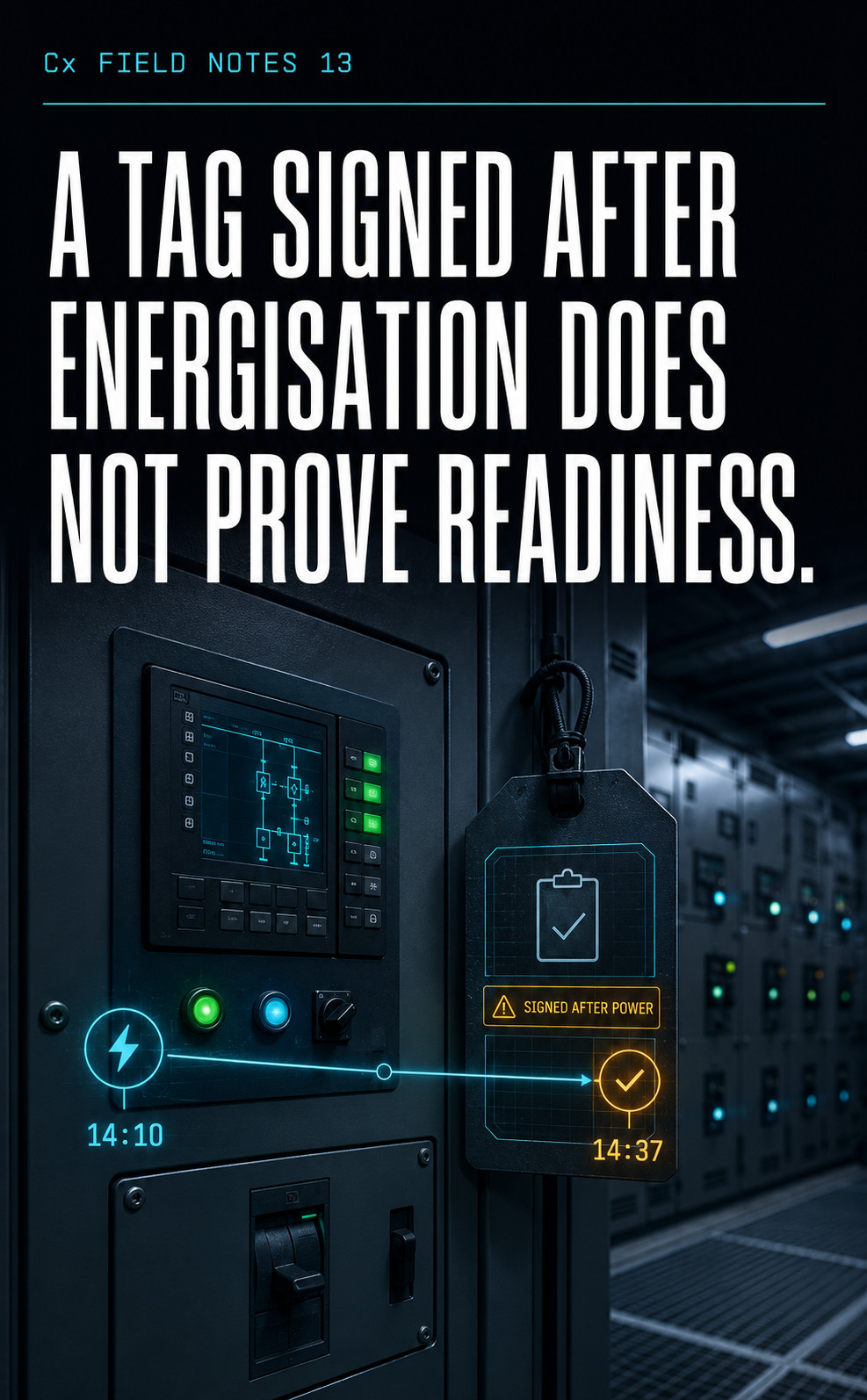
Where a readiness tag or certificate is required before energisation, equipment is sometimes energised while the record-or its supporting checklists, test reports, and defect close-out-remains incomplete. The outstanding paperwork is signed later and then presented, without qualification, as evidence that the pre-energisation gate had been satisfied.
Readiness is a point-in-time decision. A signature added later establishes who signed and when; it does not, by itself, prove the condition of the system at the earlier energisation time. If the sequence is not preserved, the record can hide open prerequisites, blur who authorised the exception, and create an audit trail that implies normal approval occurred before power was applied.
Preserve three distinct timestamps: the pre-energisation readiness decision, the actual energisation, and any later completion or review. Link each signature to the evidence available at that time. If there was no completed readiness record before energisation, label the later review as retrospective close-out; do not present it as prior approval.
Use three explicit statuses: Ready for Energisation, Energised Under Exception, and Retrospective Close-out. Lock the energisation timestamp, prevent backdated approval, and require every post-energisation sign-off to state: ‘Completed after energisation - not evidence of prior readiness.’
05 · FIELD TAKEAWAYLate close-out can complete the record. It cannot rewrite the readiness decision that existed when power was applied.
This note describes a recurring industry pattern using combined and simplified examples. It does not represent a particular client or project.